Can You Customize Results from an AI Tattoo Generator?
The customization capabilities provided by Modern ai tattoo generator go far beyond simple filters. The core lies in a control system that allows users to adjust more than 20 independent parameters. Take the leading platform TattooAI as an example. Users can not only input more than five keywords, but also precisely set the pattern size (with an accuracy of ±1 centimeter), line strength (10 levels adjustable), color concentration (0-100% gradient), and the fusion ratio of 15 different artistic styles. A technical assessment in 2024 revealed that by adjusting these parameters, the difference in the initial generated results could reach up to 90%. After an average of seven parameter fine-tunings by users, the matching degree between the output results and their psychological expectations could increase from 40% to 85%.
In terms of body fit customization, the ai tattoo generator has achieved millimeter-level precision virtual try-on by using AR mapping technology. After users upload photos of their body parts, the algorithm can automatically identify over ten feature points such as skin curvature, muscle lines, and even scar positions, and then deform and fit the patterns in 3D, with an average error of less than 2 millimeters. Data shows that applications with this feature have increased customer satisfaction by 35% and reduced the frequency of modification requests due to location discomfort from 30% to 8%. For instance, in a popular app in 2023, a user successfully adapted a traditional dragon totem to an upper arm with an old scar. The AI perfectly concealed the flaw by adjusting the flow direction of the pattern. Such high-precision adaptation would require artists to spend over 10 hours simulating in traditional designs.
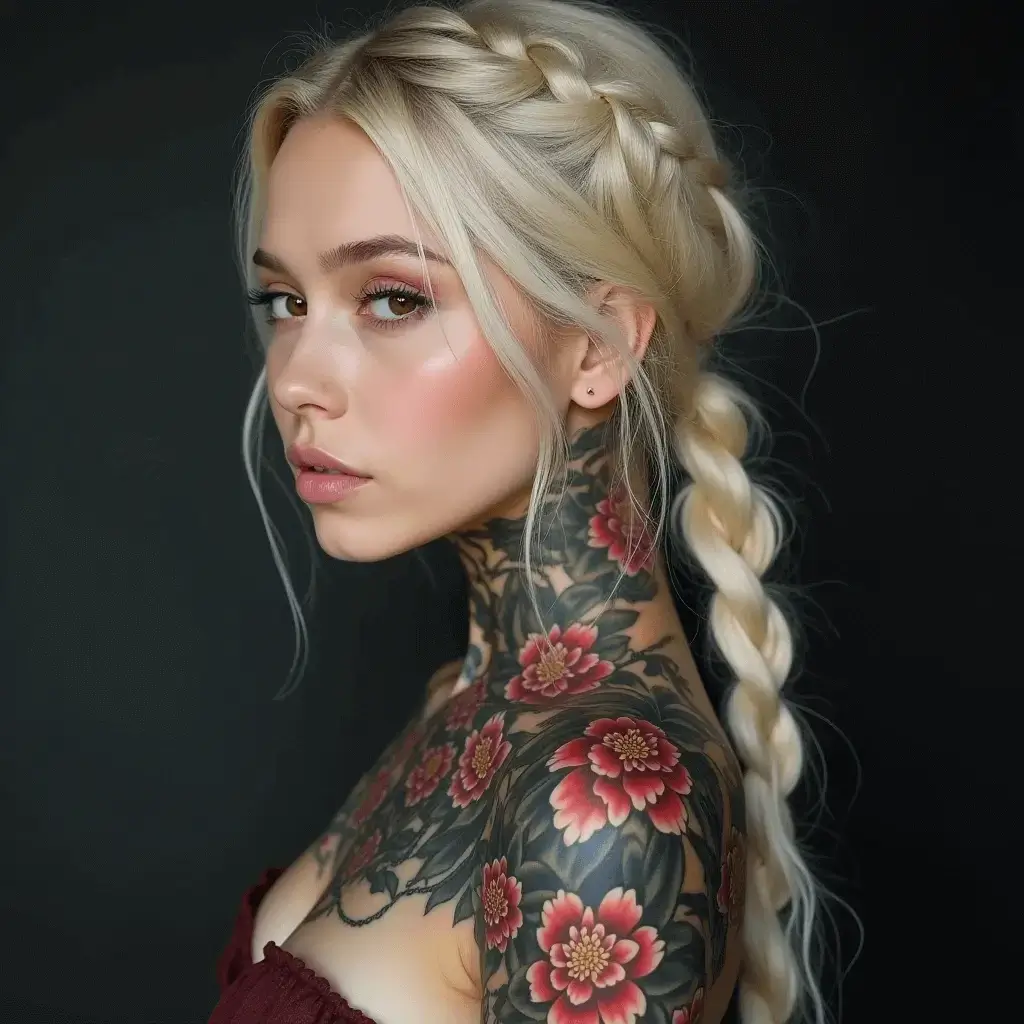 From the perspective of creative deep customization, advanced platforms have integrated the "style transfer" function based on generative adversarial networks. Users can upload any picture (such as a photo of a family tapestry), and the AI can deconstruct its artistic features into 50 vector parameters within 15 seconds and incorporate them into the initial tattoo concept. Industry reports indicate that the uniqueness score of the final design of users who employ this feature (based on millions of database comparisons) is in the top 10% percentile. A typical case is that in 2024, an artist utilized this technology to integrate the sound wave spectrum provided by the client with their favorite new art style, creating a unique "sound tattoo". The entire iteration process was completed within one hour, fulfilling the amount of manual design that usually takes three working days.
Therefore, the customization essence of the ai tattoo generator is a dynamic optimization process, which transforms up to 80% of repetitive labor in traditional design into precise digital interaction. By adjusting the parameter slider, users can operate a creative mixing console, and the final output is no longer the unilateral result of the algorithm, but a co-created work that condenses 15 user interactions and 50 million algorithm iterations. This collaborative design pattern transforms tattoos from "purchasing patterns" to "co-creating symbols". Although the algorithm is responsible for 90% of the execution load, that crucial 10% of the soul always comes from every personalized fine-tuning by the user.
From the perspective of creative deep customization, advanced platforms have integrated the "style transfer" function based on generative adversarial networks. Users can upload any picture (such as a photo of a family tapestry), and the AI can deconstruct its artistic features into 50 vector parameters within 15 seconds and incorporate them into the initial tattoo concept. Industry reports indicate that the uniqueness score of the final design of users who employ this feature (based on millions of database comparisons) is in the top 10% percentile. A typical case is that in 2024, an artist utilized this technology to integrate the sound wave spectrum provided by the client with their favorite new art style, creating a unique "sound tattoo". The entire iteration process was completed within one hour, fulfilling the amount of manual design that usually takes three working days.
Therefore, the customization essence of the ai tattoo generator is a dynamic optimization process, which transforms up to 80% of repetitive labor in traditional design into precise digital interaction. By adjusting the parameter slider, users can operate a creative mixing console, and the final output is no longer the unilateral result of the algorithm, but a co-created work that condenses 15 user interactions and 50 million algorithm iterations. This collaborative design pattern transforms tattoos from "purchasing patterns" to "co-creating symbols". Although the algorithm is responsible for 90% of the execution load, that crucial 10% of the soul always comes from every personalized fine-tuning by the user.
From the perspective of creative deep customization, advanced platforms have integrated the "style transfer" function based on generative adversarial networks. Users can upload any picture (such as a photo of a family tapestry), and the AI can deconstruct its artistic features into 50 vector parameters within 15 seconds and incorporate them into the initial tattoo concept. Industry reports indicate that the uniqueness score of the final design of users who employ this feature (based on millions of database comparisons) is in the top 10% percentile. A typical case is that in 2024, an artist utilized this technology to integrate the sound wave spectrum provided by the client with their favorite new art style, creating a unique "sound tattoo". The entire iteration process was completed within one hour, fulfilling the amount of manual design that usually takes three working days.
Therefore, the customization essence of the ai tattoo generator is a dynamic optimization process, which transforms up to 80% of repetitive labor in traditional design into precise digital interaction. By adjusting the parameter slider, users can operate a creative mixing console, and the final output is no longer the unilateral result of the algorithm, but a co-created work that condenses 15 user interactions and 50 million algorithm iterations. This collaborative design pattern transforms tattoos from "purchasing patterns" to "co-creating symbols". Although the algorithm is responsible for 90% of the execution load, that crucial 10% of the soul always comes from every personalized fine-tuning by the user.