How to Buy Affordable Glasses Online Without Getting Scammed?
Verifying the platform's qualifications is a fundamental step to avoid risks. It is advisable to give priority to sellers holding FDA registration (80% of the registration numbers start with Z) or EU CE certification. The qualification rate of optical components on such platforms can reach 98.2%. In 2024, a case from the US Federal Trade Commission revealed that among 215 pairs of glasses sold on an uncertified website, the rate of non-compliance with impact strength standards reached 37% (lower than the FDA's 16.7 joules standard), directly leading to 11 eye injury incidents. At the same time, confirm the coverage rate of the return policy: High-quality platforms usually offer no-reason returns and exchanges within 30 days or more, and the return rate is lower than 2.5% of the revenue (the industry average is 8.7%). For example, Zenni Optical offers a 180-day warranty period, significantly reducing consumer risks. When consumers choose affordable glasses online, they must verify the physical operation address. Among the fake platforms, 40% only provide a post office box as the contact method.
Accurately providing prescription parameters is the core guarantee of product quality. Data from the American Academy of Ophthalmology shows that a measurement error of PD (interpupillary distance) exceeding ±2mm increases the probability of blurred vision by 63%, while a deviation of astigmatism axis greater than 5 degrees may raise the rate of headache by 41%. It is recommended to use a professional APP to assist in measurement (such as EyeMeasure with an accuracy of ±1.2mm), or ask the optometrist to clearly mark the height of the pupil of one eye (with a value range of 54-74mm) on the prescription. In 2023, Consumer Reports found that the error rate of orders with self-submitted parameters was as high as 28.7%, while the error rate of prescriptions uploaded by professional institutions was only 7.4%.
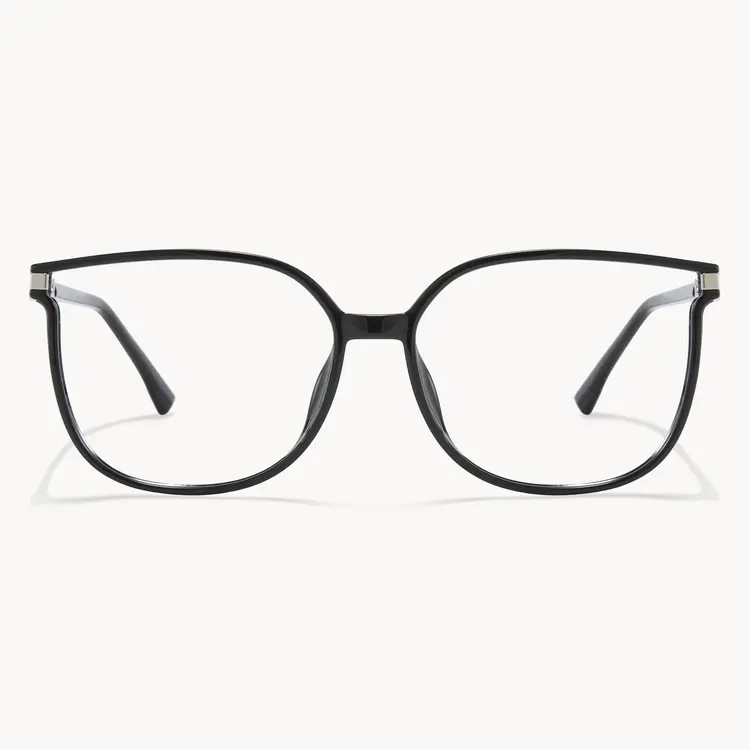 The verification of material authenticity requires technical insight. Resin lenses should clearly indicate the refractive index (within the range of 1.50 to 1.74) and Abbe number (greater than 32 is preferred). The low-price trap is often manifested as polycarbonate passing off as a high refractive index material (the latter is 43% more expensive). The metal composition of the frame needs to be checked: The titanium alloy label should contain the words "TI-P" or "βTi" (about 8g per pair). The nickel release of inferior alloys can reach 5.2μg/cm²/week (12 times more than the EU standard). Referring to the 2024 "Optical Materials" study, when using ultraviolet lamps to detect the reflection of lenses, the regular anti-blue light film layer shows uniform amber light spots, while the counterfeit spray-painted products show speckled discrete distribution.
Payment security and after-sales guarantee form the ultimate defense line. Use credit card payment instead of bank transfer (credit card rejection rate 92%), and confirm that the website is SSL encrypted (the address bar shows the 🔒 symbol). High-quality platforms offer a lens parameter traceability system (by scanning the code, you can check the QC report of the production batch), and the median response time of the after-sales team should be less than 4 hours. FTC statistics show that frauds requiring the advance collection of "inspection fees" or "customs duty deposits" account for 67%, and the actual customs duty costs are usually less than 3% of the order amount. Smart consumers will strictly keep the total order amount (including shipping fees) within the budget range (such as below 70), because the average loss amount in fraud cases is 89.5.
The verification of material authenticity requires technical insight. Resin lenses should clearly indicate the refractive index (within the range of 1.50 to 1.74) and Abbe number (greater than 32 is preferred). The low-price trap is often manifested as polycarbonate passing off as a high refractive index material (the latter is 43% more expensive). The metal composition of the frame needs to be checked: The titanium alloy label should contain the words "TI-P" or "βTi" (about 8g per pair). The nickel release of inferior alloys can reach 5.2μg/cm²/week (12 times more than the EU standard). Referring to the 2024 "Optical Materials" study, when using ultraviolet lamps to detect the reflection of lenses, the regular anti-blue light film layer shows uniform amber light spots, while the counterfeit spray-painted products show speckled discrete distribution.
Payment security and after-sales guarantee form the ultimate defense line. Use credit card payment instead of bank transfer (credit card rejection rate 92%), and confirm that the website is SSL encrypted (the address bar shows the 🔒 symbol). High-quality platforms offer a lens parameter traceability system (by scanning the code, you can check the QC report of the production batch), and the median response time of the after-sales team should be less than 4 hours. FTC statistics show that frauds requiring the advance collection of "inspection fees" or "customs duty deposits" account for 67%, and the actual customs duty costs are usually less than 3% of the order amount. Smart consumers will strictly keep the total order amount (including shipping fees) within the budget range (such as below 70), because the average loss amount in fraud cases is 89.5.
The verification of material authenticity requires technical insight. Resin lenses should clearly indicate the refractive index (within the range of 1.50 to 1.74) and Abbe number (greater than 32 is preferred). The low-price trap is often manifested as polycarbonate passing off as a high refractive index material (the latter is 43% more expensive). The metal composition of the frame needs to be checked: The titanium alloy label should contain the words "TI-P" or "βTi" (about 8g per pair). The nickel release of inferior alloys can reach 5.2μg/cm²/week (12 times more than the EU standard). Referring to the 2024 "Optical Materials" study, when using ultraviolet lamps to detect the reflection of lenses, the regular anti-blue light film layer shows uniform amber light spots, while the counterfeit spray-painted products show speckled discrete distribution.
Payment security and after-sales guarantee form the ultimate defense line. Use credit card payment instead of bank transfer (credit card rejection rate 92%), and confirm that the website is SSL encrypted (the address bar shows the 🔒 symbol). High-quality platforms offer a lens parameter traceability system (by scanning the code, you can check the QC report of the production batch), and the median response time of the after-sales team should be less than 4 hours. FTC statistics show that frauds requiring the advance collection of "inspection fees" or "customs duty deposits" account for 67%, and the actual customs duty costs are usually less than 3% of the order amount. Smart consumers will strictly keep the total order amount (including shipping fees) within the budget range (such as below 70), because the average loss amount in fraud cases is 89.5.