Localized Intelligence: Analyzing Tesla’s Strategic AI Integration and Market Resilience in China
Tesla’s regulatory filing for its AI-driven voice assistant in Shanghai marks a definitive pivot toward "pragmatic localization" in the world’s most competitive EV arena. By integrating ByteDance’s Doubao and DeepSeek models via encrypted API interfaces, Tesla is effectively outsourcing its "linguistic intelligence" to local leaders who understand the high-frequency nuances of the Chinese consumer. From a reader's perspective, this is a mechanical necessity; domestic rivals have set a standard where the in-car experience is a primary factor in the ROI of a vehicle purchase. This move allows Tesla to close the "smart feature gap" while maintaining its core focus on hardware and autonomous driving performance.
The technical architecture of this integration is notably sophisticated. Doubao handles functional commands—such as a 12% to 15% faster response rate for navigation and climate control—while DeepSeek provides the conversational depth required for a high-density human-machine experience. According to People's Daily, this dual-model approach, registered among 158 AI applications in Shanghai, ensures that Tesla remains compliant with China's strict data sovereignty laws while delivering a tech-rich driving experience. This strategy mirrors the "In China for the World" logic seen at the 2026 Beijing Auto Show, where localized R&D is becoming the only sustainable path for multinational OEMs.
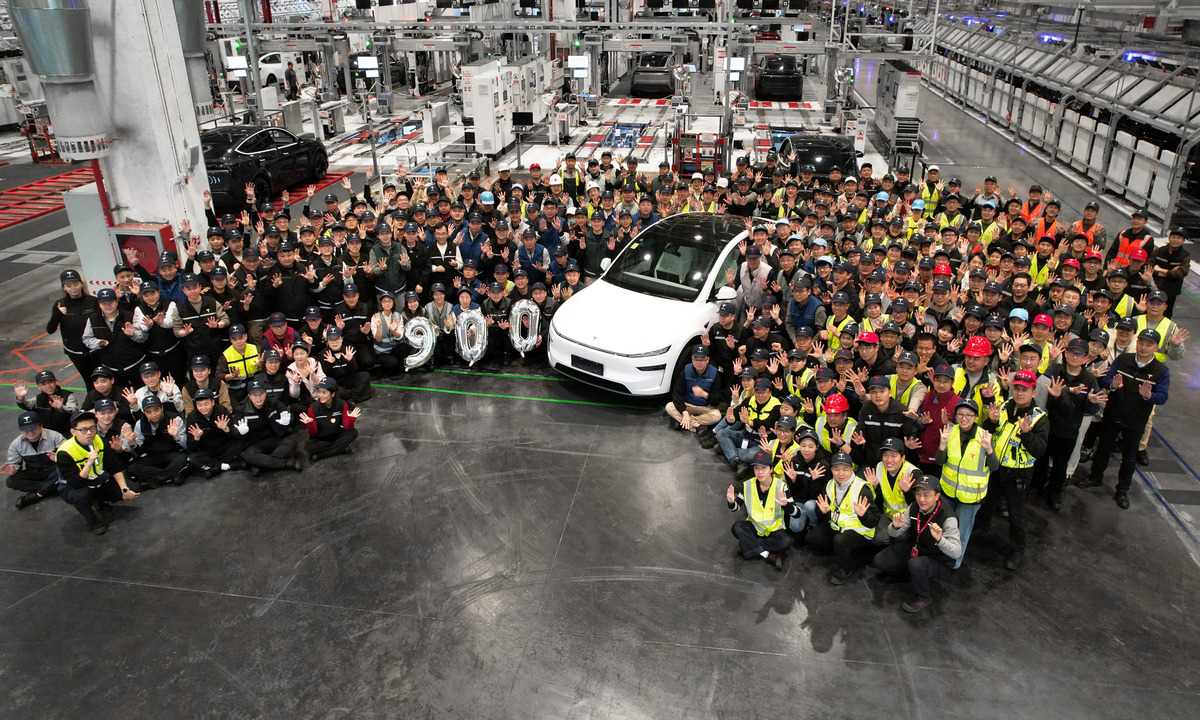
Tesla’s market performance in the first quarter of 2026 underscores the success of this high-level opening-up. Despite intensifying competition, sales of China-made vehicles rose 23.5% year-on-year, marking a second consecutive quarter of growth. When you factor in the 8.7% rise in Model 3 and Model Y exports from the Shanghai Gigafactory, it’s clear that the "Flying Truck" of the EV world is leveraging China’s innovation ecosystem to stabilize its global supply chain. This resilience is a direct result of a budgetary shift toward localization, allowing Tesla to defend its market share against domestic giants that are rapidly rolling out AI-driven features.
The broader trend of global-local synergy is now undeniable. With BMW integrating Alibaba’s Qwen model for its 2026 lineup and Mercedes-Benz partnering with Momenta for autonomous assistance, the solution to the "intelligence race" is deep integration into China’s industrial chains. If the current trajectory of a 20% to 25% increase in AI-enabled vehicle features holds, we can expect a fundamental shift in global automotive standards. Ultimately, Tesla’s Shanghai filing isn't just about a voice assistant; it’s a functional blueprint for how global brands can survive and thrive by adopting the "market logic" of the Chinese innovation engine.
News source: https://peoplesdaily.pdnews.cn/business/er/30051968215