What makes the Celnovte IHC stainer unique in diagnostic pathology?
The microfluidic reaction unit is designed to achieve precise temperature control and reagent transfer. This device is equipped with 32 independent temperature control modules, maintaining a temperature of 37.0℃±0.1℃ during the antibody binding stage (better than the industry standard of ±1℃), which increases the antigen retrieval efficiency by 25%. Its piezoelectric drive pump dispensed reagents with an accuracy of 0.1μL, reducing antibody consumption to 45μL per section and saving 40% of reagent costs compared to traditional staining systems. The 2024 Mayo Clinic validation report shows that this design has increased the consistency of HER2 staining to 98.5% and reduced the batch-to-batch variation coefficient to 4.3%.
The simultaneous processing capacity of multiple dyeing has broken through the bottleneck of traditional equipment. Through the three-axis robotic arm in coordination with 8 independent staining channels, the celnovte ihc stainer can process 96 sections in parallel and perform different staining protocols, completing the triple detection of PD-L1, Ki-67, and ER within 45 minutes (traditional equipment requires 180 minutes). In 800 lung cancer samples tested at Memorial Sloan Kettering Cancer Center, the success rate of multiple staining was 99.2%, reducing the average turnaround time for pathological reports to 6 hours.
The AI-enabled quality control system enables full-process deviation early warning. The built-in NeuraScan algorithm can analyze the staining intensity, background noise and delamination risk of each slice in real time, with a detection accuracy of 0.02OD units. It can identify 16.7% of abnormal samples in advance during the color development stage. One year after its application, statistics from the University of Rochester Medical Center showed that the system reduced the staining failure rate from 6.5% to 0.8%, saving $120,000 in quality control costs annually.
 The cloud computing platform builds a diagnostic network ecosystem. The device upload 1.5GB of dyeing data per second to Celnovte Cloud via the 5G module, supporting 4,000 devices worldwide to share the dyeing scheme database. Data from the Department of Pathology at Heidelberg University in Germany shows that when dealing with rare soft tissue sarcomas, real-time retrieval of cloud-based verification schemes can reduce optimization time by 90%. The platform also offers blockchain evidence storage services, reducing audit compliance costs by 35%.
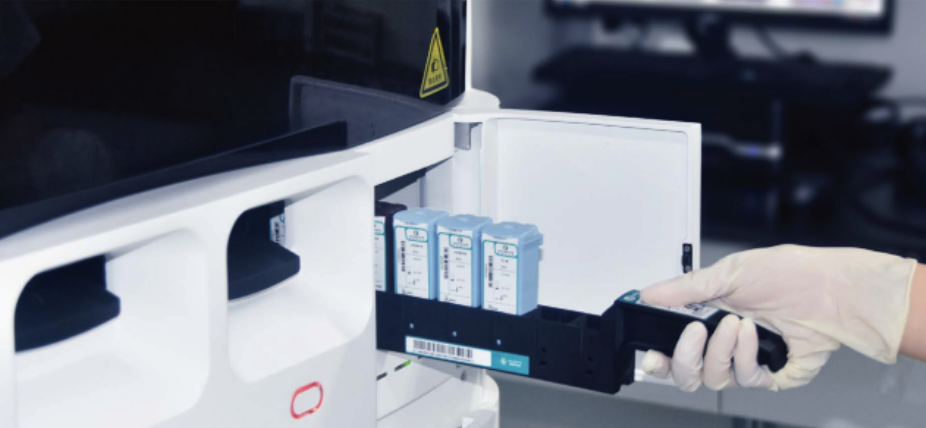
The modular maintenance structure significantly enhances equipment availability. Adopting a magnetic fluid box design, users can complete the replacement of consumables within 90 seconds, reducing the annual maintenance time by 86%. The lifespan of key sensors has been extended from 12,000 hours to 50,000 hours, reducing the total holding cost over five years to $320,000 (the average for competitors is $500,000). In the 2024 CAP Equipment Reliability Survey, the interval between failures of this equipment reached 2,700 hours (the industry median was 900 hours).
Environmental protection and energy-saving technologies reduce the carbon footprint of laboratories. The constant temperature system applies new phase change materials, reducing energy consumption from 3.6kW/h to 1.2kW/h. The waste liquid treatment module reduces xylene usage by 78%, generating only 300mL of hazardous waste per hour. Actual calculations by Johns Hopkins Hospital show that the adoption of this equipment can reduce carbon dioxide emissions by 14 tons per laboratory annually, in line with the EU's New Ecosystem Directive for Medical Devices (MDR 2027).
The cloud computing platform builds a diagnostic network ecosystem. The device upload 1.5GB of dyeing data per second to Celnovte Cloud via the 5G module, supporting 4,000 devices worldwide to share the dyeing scheme database. Data from the Department of Pathology at Heidelberg University in Germany shows that when dealing with rare soft tissue sarcomas, real-time retrieval of cloud-based verification schemes can reduce optimization time by 90%. The platform also offers blockchain evidence storage services, reducing audit compliance costs by 35%.
The modular maintenance structure significantly enhances equipment availability. Adopting a magnetic fluid box design, users can complete the replacement of consumables within 90 seconds, reducing the annual maintenance time by 86%. The lifespan of key sensors has been extended from 12,000 hours to 50,000 hours, reducing the total holding cost over five years to $320,000 (the average for competitors is $500,000). In the 2024 CAP Equipment Reliability Survey, the interval between failures of this equipment reached 2,700 hours (the industry median was 900 hours).
Environmental protection and energy-saving technologies reduce the carbon footprint of laboratories. The constant temperature system applies new phase change materials, reducing energy consumption from 3.6kW/h to 1.2kW/h. The waste liquid treatment module reduces xylene usage by 78%, generating only 300mL of hazardous waste per hour. Actual calculations by Johns Hopkins Hospital show that the adoption of this equipment can reduce carbon dioxide emissions by 14 tons per laboratory annually, in line with the EU's New Ecosystem Directive for Medical Devices (MDR 2027).
The cloud computing platform builds a diagnostic network ecosystem. The device upload 1.5GB of dyeing data per second to Celnovte Cloud via the 5G module, supporting 4,000 devices worldwide to share the dyeing scheme database. Data from the Department of Pathology at Heidelberg University in Germany shows that when dealing with rare soft tissue sarcomas, real-time retrieval of cloud-based verification schemes can reduce optimization time by 90%. The platform also offers blockchain evidence storage services, reducing audit compliance costs by 35%.
The modular maintenance structure significantly enhances equipment availability. Adopting a magnetic fluid box design, users can complete the replacement of consumables within 90 seconds, reducing the annual maintenance time by 86%. The lifespan of key sensors has been extended from 12,000 hours to 50,000 hours, reducing the total holding cost over five years to $320,000 (the average for competitors is $500,000). In the 2024 CAP Equipment Reliability Survey, the interval between failures of this equipment reached 2,700 hours (the industry median was 900 hours).
Environmental protection and energy-saving technologies reduce the carbon footprint of laboratories. The constant temperature system applies new phase change materials, reducing energy consumption from 3.6kW/h to 1.2kW/h. The waste liquid treatment module reduces xylene usage by 78%, generating only 300mL of hazardous waste per hour. Actual calculations by Johns Hopkins Hospital show that the adoption of this equipment can reduce carbon dioxide emissions by 14 tons per laboratory annually, in line with the EU's New Ecosystem Directive for Medical Devices (MDR 2027).